Ecuador by Latventure
Ecuador & Galapagos
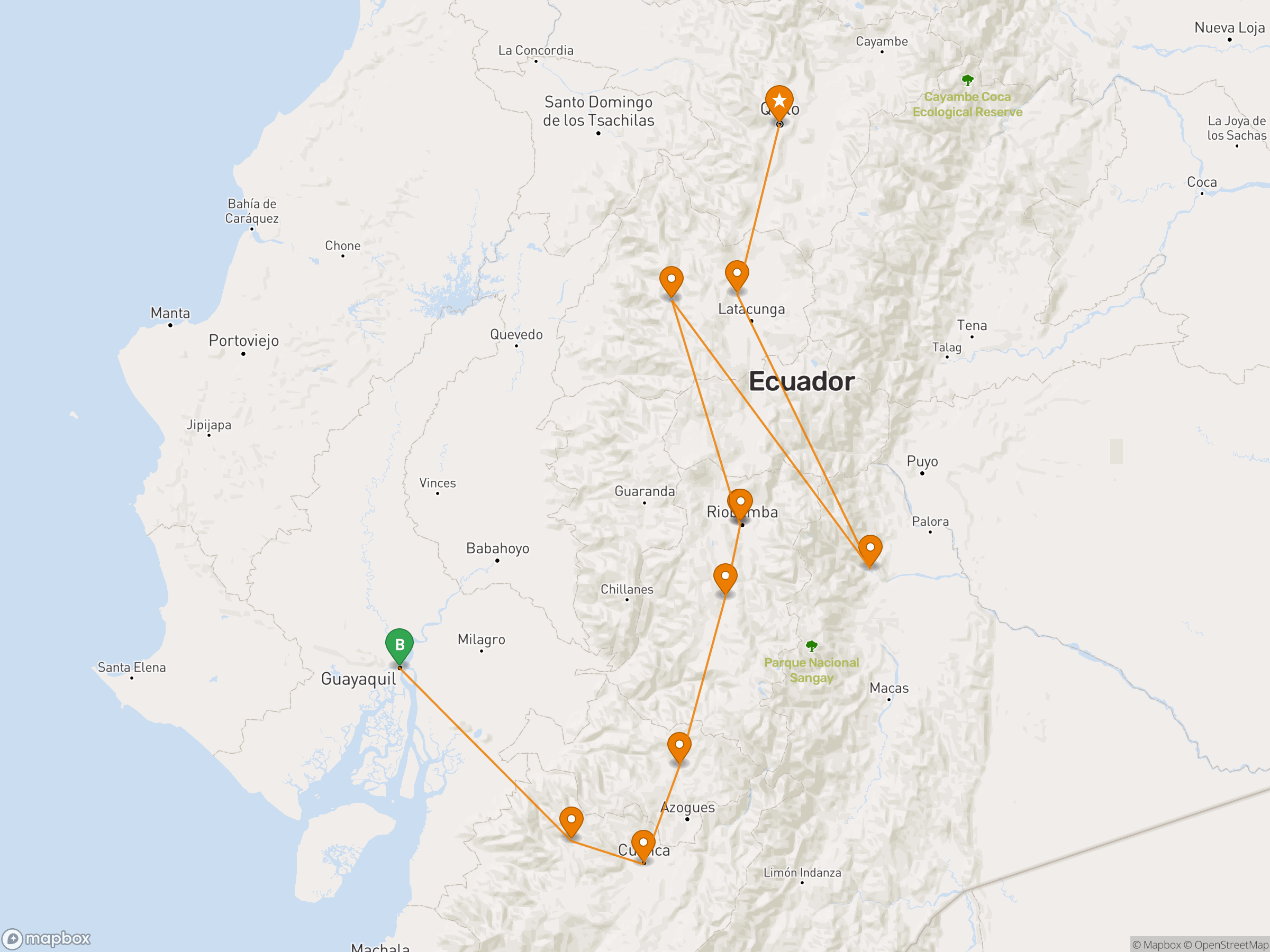
Ecuador, named after its location on the equator, is one of the smaller South American countries – yet it offers an incomparable diversity of landscapes. Within a relatively small area, you find the Pacific coast with tropical beaches and mangroves, the towering Andes with snow-capped volcanoes, and the species-rich Amazon lowlands in the east.
Added to this is the world-famous Galápagos archipelago, located around 1,000 km off the coast – a living natural history museum with unique wildlife. This extraordinary variety makes Ecuador one of the most exciting travel destinations on the continent.
Ecuador is ethnically and culturally diverse: alongside the Spanish-speaking majority, many indigenous peoples (e.g. Quechua) live here with rich traditions. The capital Quito delights visitors with a beautifully preserved colonial old town at 2,850 m above sea level. Overall, Ecuador is often described as “compact South America in miniature”.



Good to know
Ecuador combines, in a very small area, volcanic Andes, tropical coasts, Amazon rainforest and colonial cities such as Quito and Cuenca. Off the coast lie the Galápagos Islands – a unique natural paradise with endemic wildlife. Giant tortoises, marine iguanas and blue-footed boobies often approach visitors without fear. The islands are considered the birthplace of Darwin’s theory of evolution – a magical place, strictly protected and full of life.
Flight connections
Quito and Guayaquil are well connected from Europe, with direct flights from Amsterdam and Madrid. North America offers many connections as well. The Galápagos Islands are reached via domestic flights from Quito or Guayaquil. Upon arrival in Quito, keep the altitude (2,850 m) in mind. For more information, consult Google Flights.
Entry requirements
Visa-free entry for stays of up to 90 days for many nationalities (EU, Switzerland and others). Passports must be valid for at least six months. A return ticket may be required. For the Galápagos, you need a transit control card (TCT) and pay a USD 100 national park fee locally. No vaccination certificate is required, except when entering from a yellow-fever risk area.
Best time to travel
Travel is possible year-round. Dry season in the Andes: June–September (clear and sunny). Coast: December–April (warm, beach season). The rainforest remains humid year-round, with slightly less rain from August to November. Galápagos: January–June is warm and ideal for swimming; July–December is cooler and great for whale and bird watching.
Safety
Travel with caution: in large cities such as Guayaquil and Quito, crime rates are higher, especially robbery and theft. Use registered taxis only. Political protests can disrupt travel. Avoid the border region with Colombia and certain coastal provinces. Book nature tours with local guides.
Health
No mandatory vaccinations; recommended are standard vaccines and hepatitis A. For the Amazon lowlands, a yellow fever vaccination is advisable, along with strong mosquito protection (dengue, malaria). Quito lies at 2,850 m – acclimatise slowly. Avoid tap water. Up-to-date information: HealthyTravel.
Top 10 travel highlights
Quito – Old Town & Equator Line
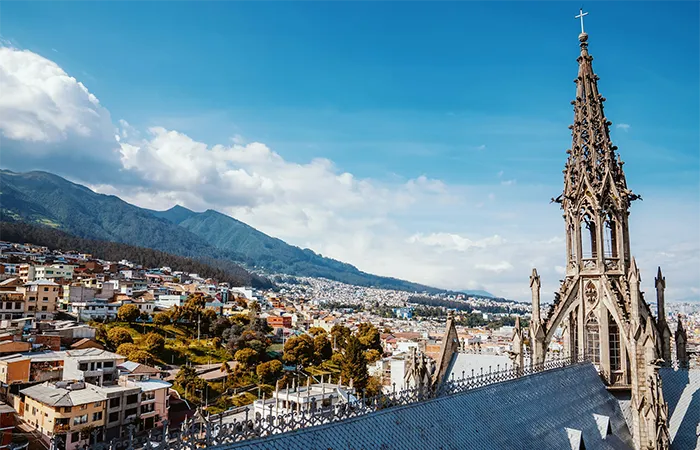
Quito fascinates with colonial charm at 2,850 m. Its well-preserved historic centre is a UNESCO World Heritage Site. Nearby is the equator monument “Mitad del Mundo”, where you can stand symbolically in both hemispheres.
Cotopaxi National Park
Cotopaxi (5,897 m) is one of the highest active volcanoes on Earth. Hiking, cycling and horseback rides through Andean páramo landscapes with views of the perfect cone offer a true high-altitude experience close to Quito.
Cuenca – Colonial City in the Highlands
Cuenca enchants with cobblestones, colonial architecture and handicrafts. This charming southern city is a UNESCO World Heritage Site and a great base for trips to Cajas National Park.
Galápagos Islands
A unique archipelago with endemic wildlife: giant tortoises, marine iguanas and blue-footed boobies. Each island has its own character. Close-up nature observation – a living laboratory of evolution in the middle of the Pacific.
Baños – Adventure & Hot Springs
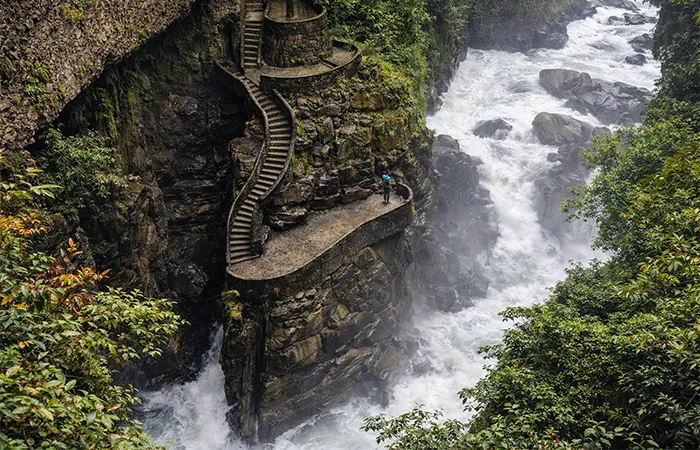
At the foot of Tungurahua volcano lies Baños, known for hot springs, waterfalls, canyoning, zip lines and the “La Casa del Árbol” swing. A perfect mix of nature, adrenaline and relaxation.
Quilotoa Crater Lake
A turquoise crater lake at around 3,900 m: Quilotoa is a highlight of the Andes. Trekkers love the multi-day “Quilotoa Loop” through indigenous villages with wide views of volcanoes and deep valleys.
Otavalo Market & Surroundings
Otavalo is considered one of the most colourful markets in South America – textiles, crafts and music. The region offers volcanic lakes (Laguna Cuicocha), waterfalls and authentic indigenous culture.
Amazon (Oriente)
Deep rainforest, rivers, parrots and monkeys: in Ecuador’s Amazon region you experience biodiversity up close – for example in Cuyabeno or Yasuní reserves. Boat trips and night walks with guides are highly rewarding.
Pacific Coast – Surf & Sunsets
Ecuador’s coast attracts visitors with beaches such as Montañita (surf and nightlife) or Puerto López (whale watching). Between mangroves, fishing villages and warm seas, tropical vibes come naturally.
La Nariz del Diablo – Andean Train Ride
The “Devil’s Nose” train route runs spectacularly through switchbacks and rock faces. Although touristy today, the ride near Alausí remains an engineering marvel, with panoramic views of deep gorges and mountain villages.